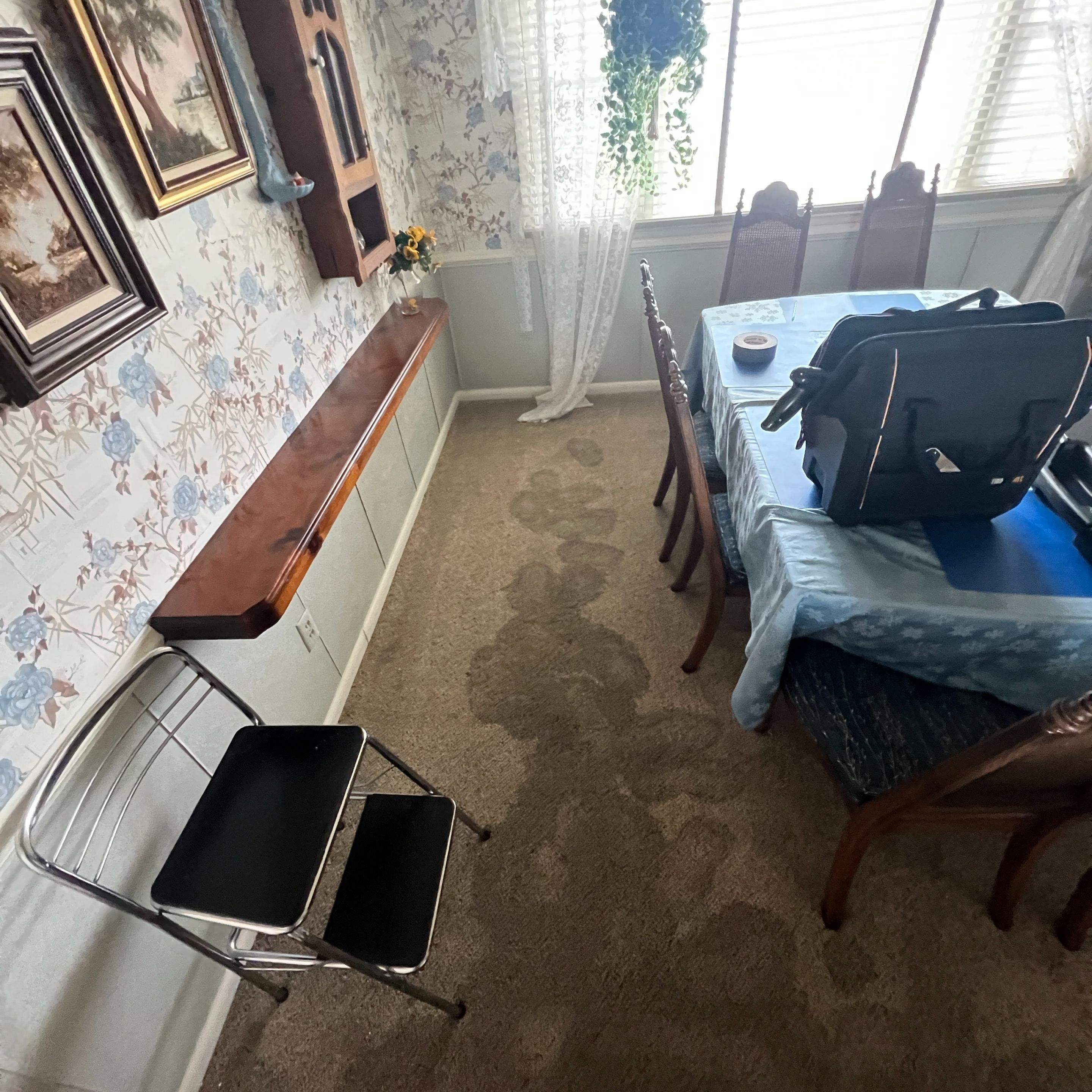
Problem: Standing Water Will Not Stop Rising
Storm water enters your Sweetser home through three main paths: roof breaches, foundation seepage, and sewer backflow during heavy rain. Once water reaches two inches, your shop vac is useless. Drywall wicks moisture upward at roughly one inch per hour, hardwood begins cupping within six hours, and insulation in your walls turns into a wet sponge that will never dry on its own.
Solution: Professional Extraction Within the First 24 Hours
Truck-mounted extraction units pull thousands of gallons per hour, which is the only realistic way to clear a flooded basement or first floor fast enough to prevent secondary damage. When our crew arrives, we run a moisture map of the property, identify Category 1, 2, or 3 contamination, and begin removing water from the lowest point upward. For storm events with sewer involvement, we follow Category 3 sewage cleanup protocols, which means full PPE, antimicrobial treatment, and removal of any porous material that absorbed contaminated water. Cutting corners here is how mold colonies start two weeks later.
Problem: Costs Feel Unpredictable
Storm restoration in Sweetser typically runs from $3,000 for a contained basement event to $25,000 or more for whole-home flooding with structural drying, demolition, and rebuild. The variables are square footage affected, water category, materials involved, and how quickly mitigation started.
Solution: Documented Scope and Direct Insurance Communication
Here is the order of operations we recommend to every client:
- Photograph everything before you move it, including water lines on walls and damaged personal property.
- Call your insurance carrier and open a claim number before mitigation begins, then call a restoration company that documents to insurance standards.
- Save receipts for any emergency expenses, including hotel stays, food replacement, and temporary repairs.
We write scopes in Xactimate, the platform most carriers use, which removes a layer of friction from the adjuster review. We do not work for the insurance company. We work for you, and we will tell you when something on the scope is being underpaid.
Problem: Mold Growth Starting Behind the Scenes
Mold needs four things: moisture, organic material, oxygen, and temperatures between 40 and 100 degrees. A Sweetser home after a storm has all four. Visible growth can appear in 48 to 72 hours, but hidden growth inside wall cavities and under flooring can develop quietly for weeks.
Problem: Insurance Claim Feels Like a Maze
You are exhausted, your kids are at a relative's house, and the adjuster wants photos, an itemized scope, and proof of mitigation. Most Sweetser homeowners have never filed a claim this size. Mistakes in the first 48 hours can cost you thousands in denied coverage.
Problem: Damaged Roof Letting Water In Repeatedly
If high winds tore shingles or a tree limb punched through your decking, every additional rainfall during Sweetser storm season makes the interior damage worse. Tarping a roof at 11pm in a thunderstorm is not a homeowner job. Falls from wet roofs are one of the most common storm-season injuries in Indiana.
Solution: Pack-Out and Contents Inventory
Sweetser Water Restoration crews can pack out salvageable contents to a controlled drying environment, photograph and log each item for your claim, and dispose of unsalvageable materials with documentation your adjuster will accept. Hard goods get cleaned and deodorized. Documents and photos can sometimes be freeze-dried by a specialty partner. You make the final call on what stays and what goes, but you make it with real information instead of panic.
Solution: Antimicrobial Treatment and Containment
After extraction and during drying, we apply EPA-registered antimicrobials to affected areas and set containment barriers when needed. If we find existing colonies during demolition, we transition to remediation protocols with negative air machines and HEPA filtration. For deeper context on the broader process, our guide on water extraction and standing water removal covers what to expect step by step.
Solution: Structural Drying With Monitored Equipment
IICRC S500 standards require psychrometric readings, not guesswork. We place commercial air movers and LGR dehumidifiers based on cubic footage, then monitor moisture content daily until materials hit dry standard. A typical Sweetser basement dry-out runs three to five days. A whole-home flood from a storm event can take seven to ten. We document every reading because your insurance carrier will request it, and because skipping this step is how callbacks happen six months later. In some cases we drill small inspection holes behind baseboards to inject air directly into wall cavities, which dries the structure without removing the drywall and saves you thousands in rebuild costs.
Problem: Hidden Moisture Inside Walls and Subfloors
The surface looks dry by day three. You assume the worst is over. Then a musty smell appears in week two, paint starts bubbling, and a moisture meter reading shows your wall cavity is still sitting at 30 percent moisture content. This is the most expensive mistake homeowners make after a storm. Drying what you can see is not the same as drying the structure. Baseboards, bottom plates, and the back side of drywall can hold water long after the carpet feels dry to the touch, and that trapped moisture is what fuels long-term structural problems.
Solution: Emergency Board-Up and Tarp Service
Our storm damage response team handles roof tarping, window board-up, and temporary weatherproofing the same night we extract water. This serves two purposes: it stops further interior damage, and it satisfies your insurance policy's mitigation requirement. Carriers can deny portions of a claim if they decide you failed to prevent additional loss. A documented tarp installation closes that argument.
Problem: Personal Belongings Soaked and Scattered
Furniture, photo albums, electronics, and clothing often take the worst of a flood. Homeowners try to triage on their own and end up tossing items that could have been saved, or keeping items that are already a health risk. Wet upholstered furniture and mattresses that sat in Category 2 or 3 water cannot be safely restored.
Solution: Itemized Estimates and Honest Conversations
We provide line-item estimates before major work begins. If your deductible is high and the damage is minor, we will say so. If you need full restoration, we will explain exactly why and what the alternatives cost. No surprise invoices, no scope creep without your approval.